Congas and Bongos
The hand drums of salsa. How the conga's tumbao and the bongo's martillo drive a salsa band, the drums' Afro-Cuban roots and the players who made them famous.
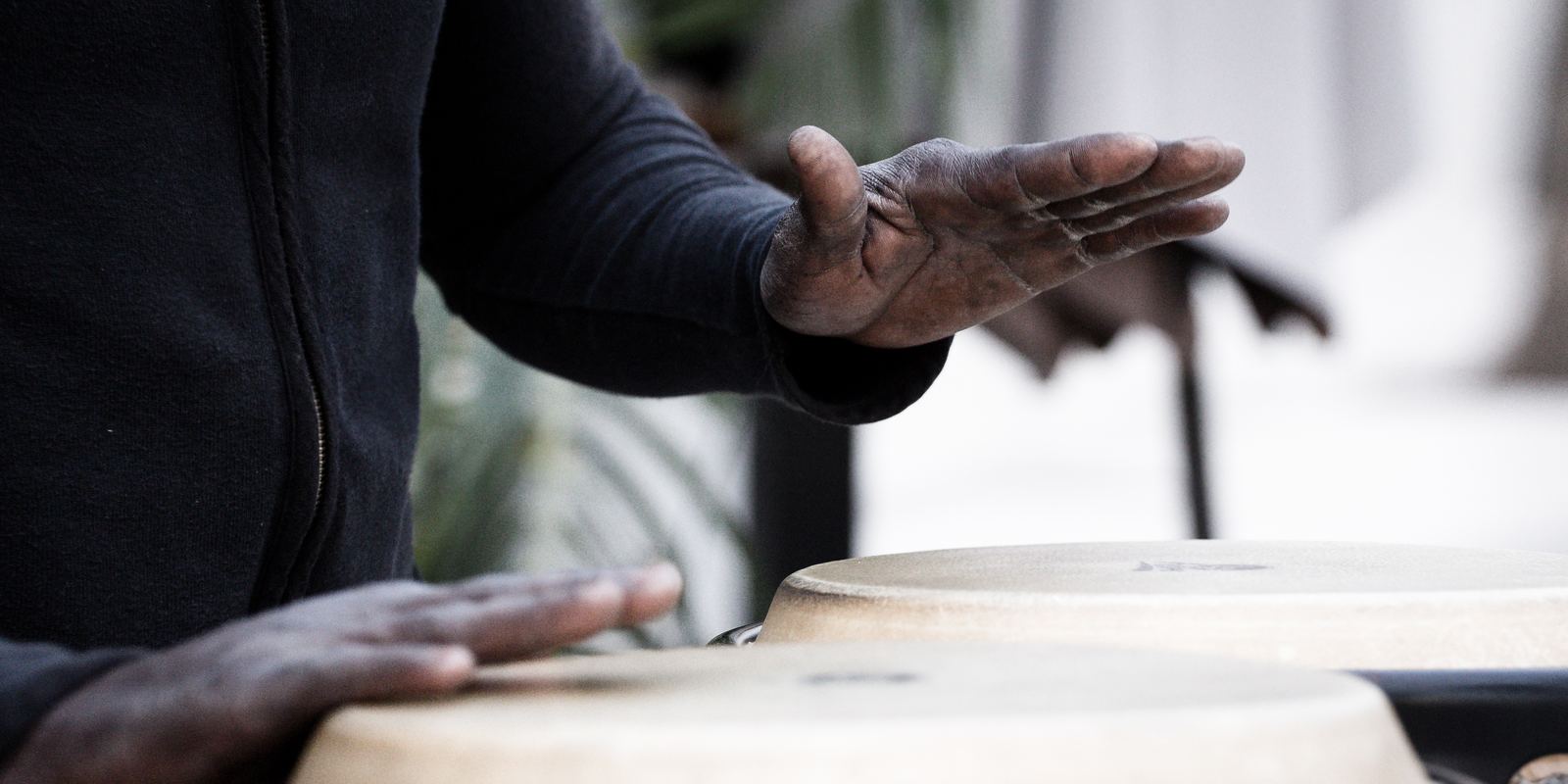
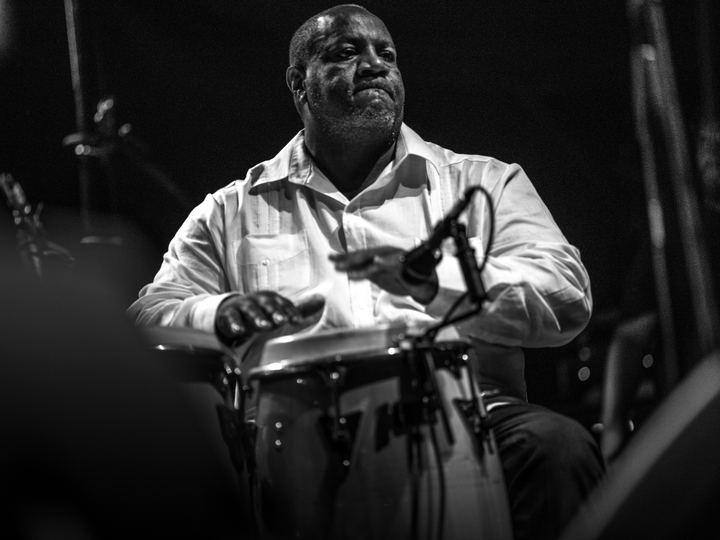
Hands on the congas: Hernán Piñera from Marbella, CC BY-SA 2.0
Afro-Cuban roots
The conga drum comes from Afro-Cuban traditions, especially the rumba, where groups of drums play interlocking patterns. In rumba the three sizes are the low tumba, the middle conga and the high quinto, which improvises. Bongos grew up in the Cuban son of eastern Cuba, as a small pair of drums held between the knees.
The tumbao
In salsa the conga player usually plays the tumbao, a steady pattern with two open tones near the end of each bar, often on beats 4 and the and of 4. These open tones are a big help for dancers, because they mark where the music breathes. On2 dancers often say they listen for the conga.
The martillo and the bell
The bongo player plays the martillo, a constant hammering pattern, during verses. In the montuno, the exciting section with coro and solos, the bongosero switches to a large hand bell, the bongo bell, which pushes the band forward. Watching the bongo player is a good clue to which section of a song you are in.
Into jazz and salsa
In 1947 Cuban conguero Chano Pozo joined Dizzy Gillespie's band, and their tune Manteca helped bring congas into jazz. Mongo Santamaria and Ray Barretto became stars, and Barretto's work at Fania made the conga central to New York salsa. Today players such as Giovanni Hidalgo are famous for astonishing technique.
Learn the sounds
Conga players make several sounds: open tones, slaps, bass tones and muted touches. Even if you never play, learning to hear them will make you a better dancer. See our clave rhythm page for the pattern that holds everything together.
Step by step
- Conga tumbao (simplified): Count 1-2-3-4: tap lightly with the heel and fingers on 1 and 2, slap on 2, then play two open tones on 4 and the and of 4.
- Bongo martillo: Play eight even strokes per bar with one hand, alternating fingers and thumb, while the other hand rests on the drum.
- Hands on the congas: Hernán Piñera from Marbella, CC BY-SA 2.0
Text written by Salsa Tranquila.