Timbales and the Cowbell
Shells, bells and fills. Timbales give salsa its sparkling fills and drive. How the drums, cowbells and cascara pattern work, and how Tito Puente made them a star.
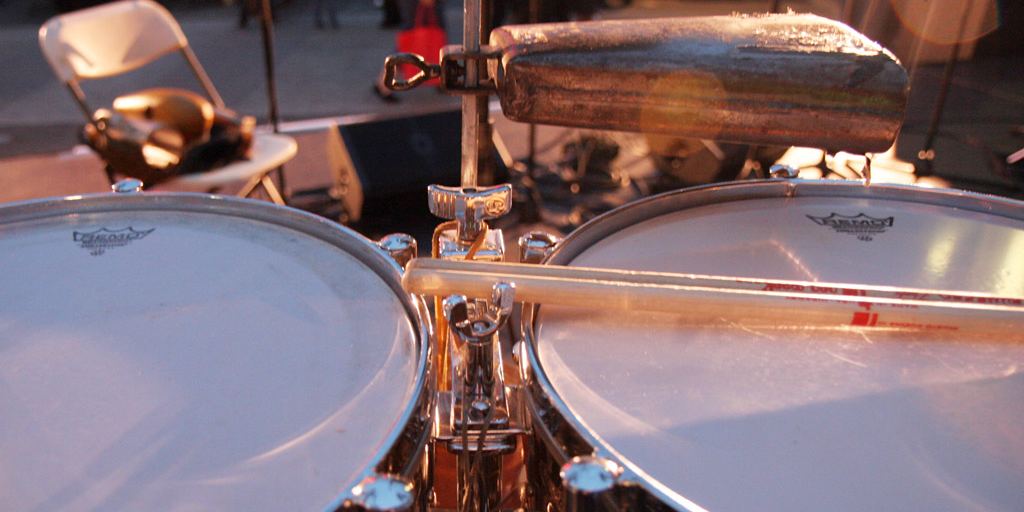
A timbales set with cowbells: Dennis Hill from The OC, So. Cal., CC BY 2.0
From timpani to timbales
In 19th-century Cuba, danzon orchestras used European timpani. Musicians developed smaller, portable metal drums called pailas criollas, which became the timbales. They are played with thin sticks, standing up, and are tuned high, so they cut through a band.
Shells and bells
During verses the timbalero often plays cascara, a pattern on the metal sides, or shells, of the drums. When the song moves to the montuno, the player switches to cowbells, usually a large mambo bell and sometimes a smaller cha-cha bell, giving the music more power.
Fills and breaks
Timbales are famous for fills, quick bursts of notes on the drumheads that lead into a new section. A roll called the abanico often announces the montuno. Dancers who learn to recognise these fills can prepare for a break or a big move.
Tito Puente and beyond
Tito Puente made the timbales a featured solo instrument, standing at the front of his orchestra. Later players such as Nicky Marrero and Orestes Vilato became stars at Fania. Read our Tito Puente page for the full story.
Listening tip
Next time you dance, listen for the moment the timbales switch from cascara to the bell. It usually means the music is building, a perfect time for shines or a more exciting turn pattern.
Famous timbaleros
Besides Tito Puente, listen for Nicky Marrero with the Fania All-Stars, Orestes Vilato with Ray Barretto and Santana, and Changuito, a key figure in Cuban songo. Each has a recognisable sound, from crisp shell patterns to explosive fills.
Timbales are usually played standing, and the player often also plays a cymbal and wood block. Some timbaleros use a small foot pedal for a bass drum or cowbell, adding extra layers to the rhythm.
If you want to try, start by playing cascara slowly on a table edge while counting the clave out loud, then speed up gradually.
Step by step
- Cascara (feel): Play a pattern on the shell that follows the clave: a mix of single and double strokes across two bars, with the other hand marking 2 and 4 on the low drum.
- Abanico fill: Play a quick roll on the high drum that finishes with a rim shot on the downbeat of the new section.
- A timbales set with cowbells: Dennis Hill from The OC, So. Cal., CC BY 2.0
Text written by Salsa Tranquila.